


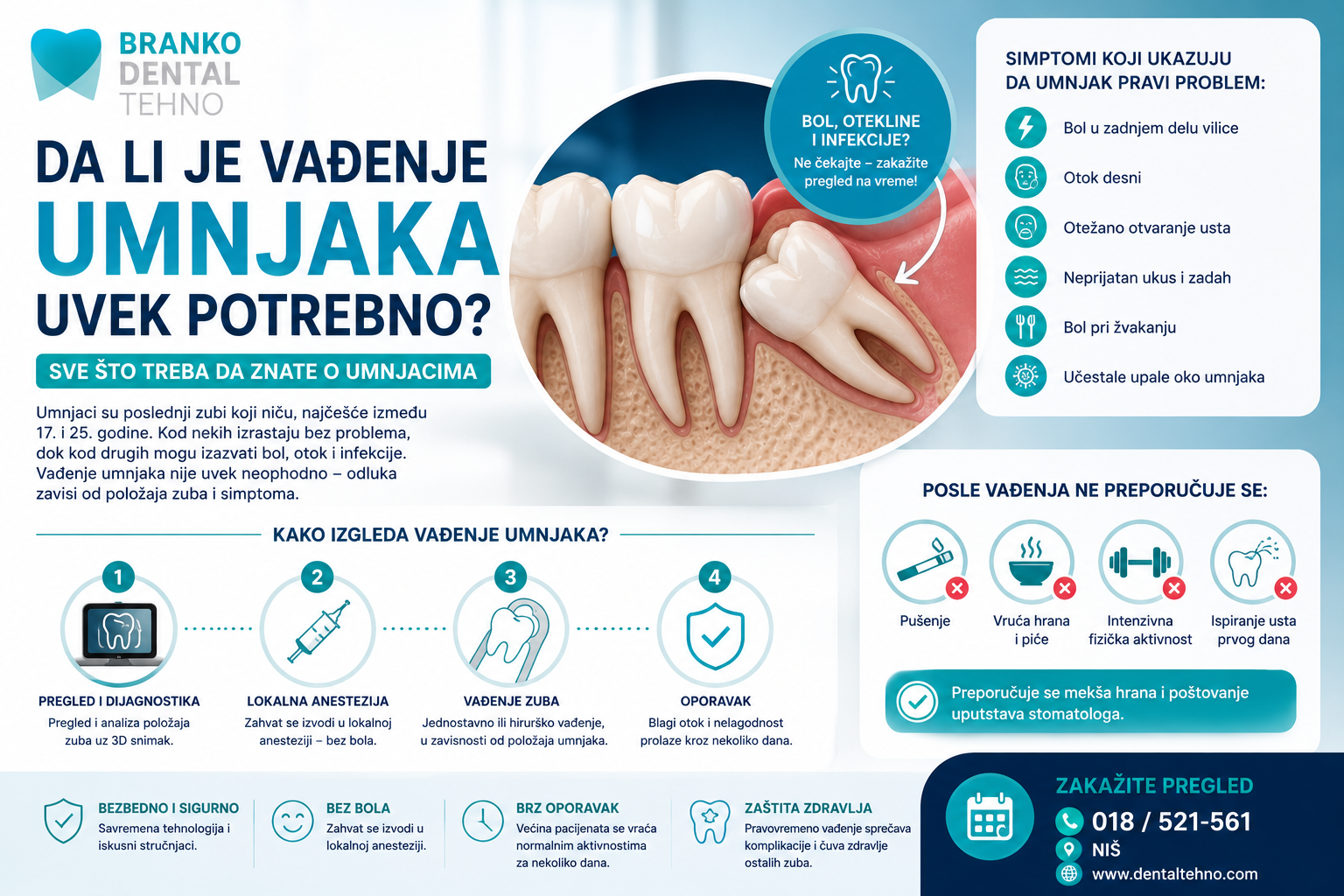
Wisdom teeth are the last teeth to erupt in the mouth and are often a source of questions, uncertainty and problems. In some people they erupt completely normally and require no intervention, while in others they can cause pain, swelling, infection or shifting of the other teeth.
That is why many patients ask – does a wisdom tooth have to be extracted, or can it stay?
The good news is that wisdom tooth extraction is not always necessary. The decision depends on the position of the tooth, the symptoms and the dentist’s assessment.
What are wisdom teeth and when do they erupt?
Wisdom teeth (third molars) are the last permanent teeth to appear, usually between the ages of 17 and 25.
Most people have four wisdom teeth:
- upper right
- upper left
- lower right
- lower left
Some people never develop all of their wisdom teeth, which is completely normal.
Why do wisdom teeth cause problems?
Unlike other teeth, wisdom teeth often lack enough space to grow properly.
As a result, they may:
- remain partially erupted
- remain completely trapped in the bone
- grow at an angle
- press against neighbouring teeth
Such wisdom teeth are called impacted wisdom teeth.
What symptoms indicate that a wisdom tooth is causing problems?
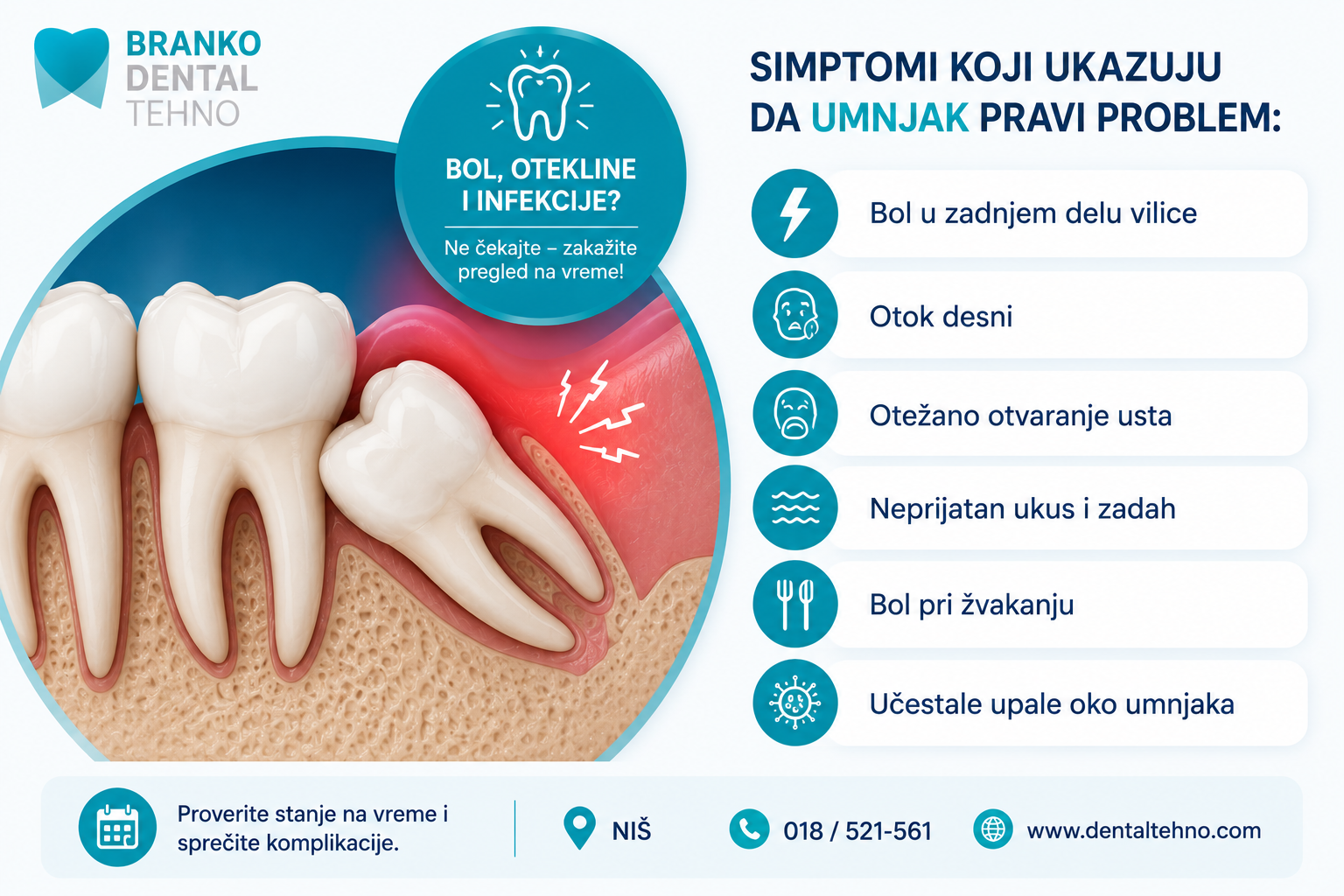
Be sure to book a check-up if you notice:
- pain at the back of the jaw
- swollen gums
- difficulty opening your mouth
- an unpleasant taste or bad breath
- pain when chewing
- recurring inflammation around the wisdom tooth
Sometimes a wisdom tooth does not hurt but still causes problems for the surrounding teeth.
Is wisdom tooth extraction always necessary?
No.
Wisdom tooth extraction is recommended when:
- there is pain
- there are recurring infections
- the wisdom tooth threatens the neighbouring tooth
- it makes oral hygiene difficult
- there is a cyst or bone damage
If the wisdom tooth has fully erupted, is properly positioned and is not causing problems, removing it is often unnecessary.
What does wisdom tooth extraction involve?
Modern oral surgery allows wisdom teeth to be extracted safely and with minimal discomfort.
The procedure includes:
1. Examination and diagnostics
Examination and analysis of the tooth’s position.
2. Local anaesthesia
The patient feels no pain during the procedure.
3. Tooth extraction
More complex cases require surgical removal.
4. Recovery
Most patients return to their normal activities within a few days.
Does wisdom tooth extraction hurt?
Pain is one of patients’ biggest fears.
During the procedure:
👉 you feel no pain.
After the procedure, you may experience:
- mild swelling
- a feeling of pressure
- temporary discomfort
This is usually easily managed with medication.
How long does recovery take?
Recovery depends on the complexity of the case.
Typically:
- day 1 – rest
- days 2–3 – swelling subsides
- day 7 – significant improvement
Complete healing takes longer, but everyday activities can be resumed quickly.
What should you avoid after wisdom tooth extraction?
Avoid:
❌ smoking
❌ hot food
❌ strenuous physical activity
❌ rinsing your mouth on the first day
Soft foods and following your dentist’s instructions are recommended.
Wisdom Tooth Extraction in Niš – Cost
- the position of the wisdom tooth
- the complexity of the procedure
- the need for surgical intervention
The most accurate estimate is given after an examination.
Wisdom tooth extraction is not always necessary, but when there is pain, infection or a risk to other teeth, timely treatment can prevent more serious complications.
A regular check-up is the best way to find out whether your wisdom tooth needs monitoring or treatment.
Book a Check-Up
If you have pain, swelling or a problem with a wisdom tooth, don’t wait for it to get worse.
📍 Stojana Novakovića 2, Niš
📞 +381 18 521 561